
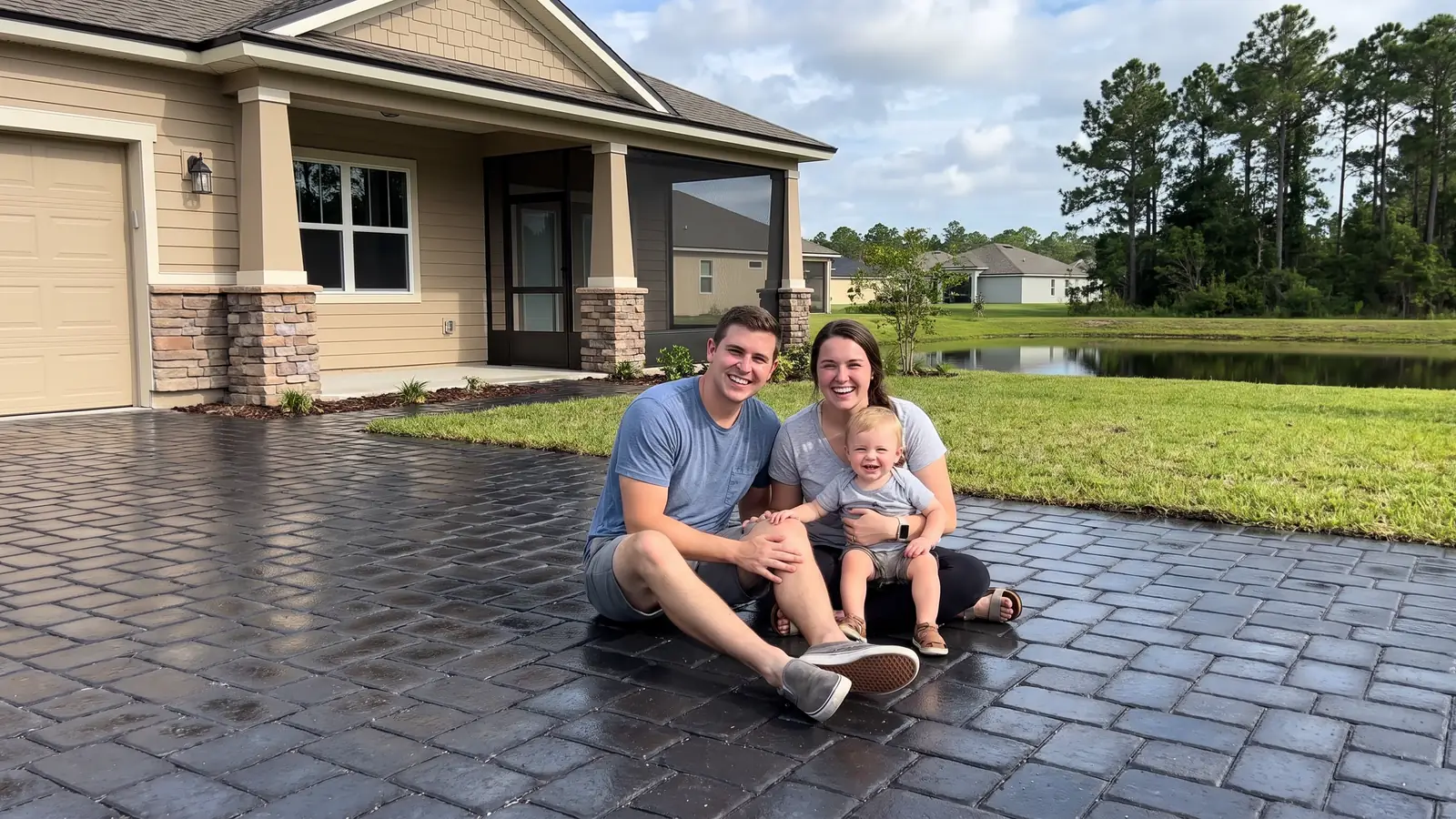
Paver sealing for Palm Valley homes
Paver Sealing in Palm Valley, FL
Palm Valley pavers live with salt air and humid summers, so call (904) 467-7129 for a free estimate.
- Brings out deeper paver color
- Fresh joint sand helps lock pavers in place
- Gives weeds less room to grow
- Makes the surface easier to keep clean
- Free estimate, no obligation
Request a Free Estimate
Free, no obligation.
Fast, careful paver sealing in Palm Valley
Paver sealing is available throughout Palm Valley, from the Intracoastal side to the streets near A1A. A local contractor cleans, re-sands and seals driveways, pool decks, patios and walks, and the estimate is free. That includes Odom's Mill, Seaside, Dolphin's Cove and the homes near Sawgrass. Ask for one, ask for your free estimate, and you will hear back within 1 business day, usually much sooner.
Maybe the pool deck feels gritty and dull, and the driveway has gone pale near the street. After a wash, new joint sand and the right sealer, the color deepens and water beads up again. The deck feels clean underfoot, and the drive looks sharp from the street. To talk it over first, call (904) 467-7129 and describe what you see at your Palm Valley home.
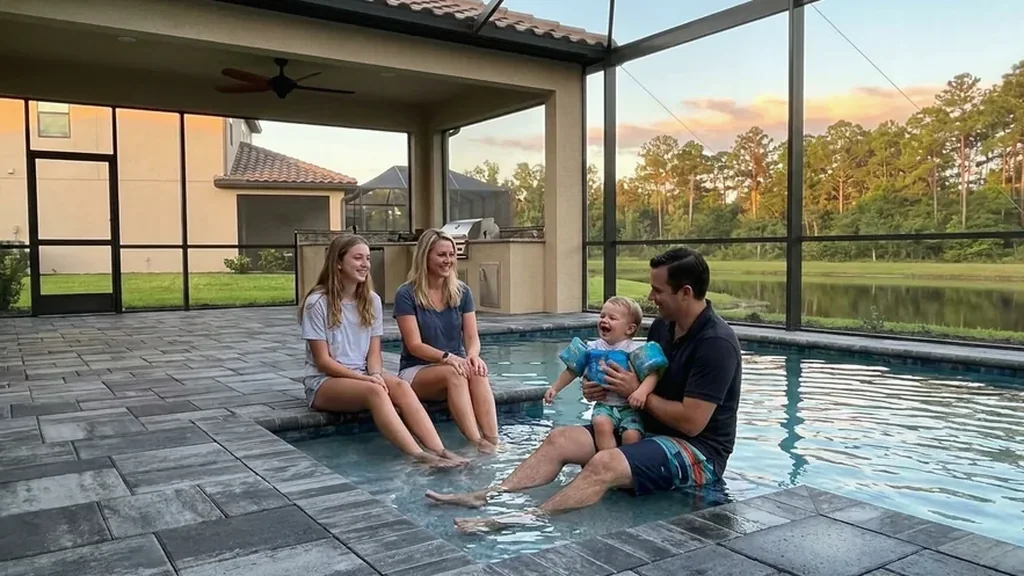
Why hire a local paver sealing contractor in Palm Valley?
Palm Valley homeowners tend to choose a contractor who knows salt air, low ground and pool decks that need traction. To see how that fits your property, call (904) 467-7129.
A free walkthrough
A contractor looks at your Palm Valley driveway, pool deck and walks in person. You get a price before you agree to anything.
A published price range
Northeast Florida companies commonly publish $1.75 to $3.25 per square foot to clean, sand and seal. Measure any Palm Valley quote against it.
Traction where it counts
A penetrating coat keeps a pool deck grippy when wet. Save the shine for the driveway or front walk, if your HOA allows it.
Your call on every step
You choose the finish, the date and whether to go ahead. A Palm Valley estimate carries no obligation.
Get Your Free Estimate in Palm Valley
Tell us about your pavers in Palm Valley.
Free, no obligation
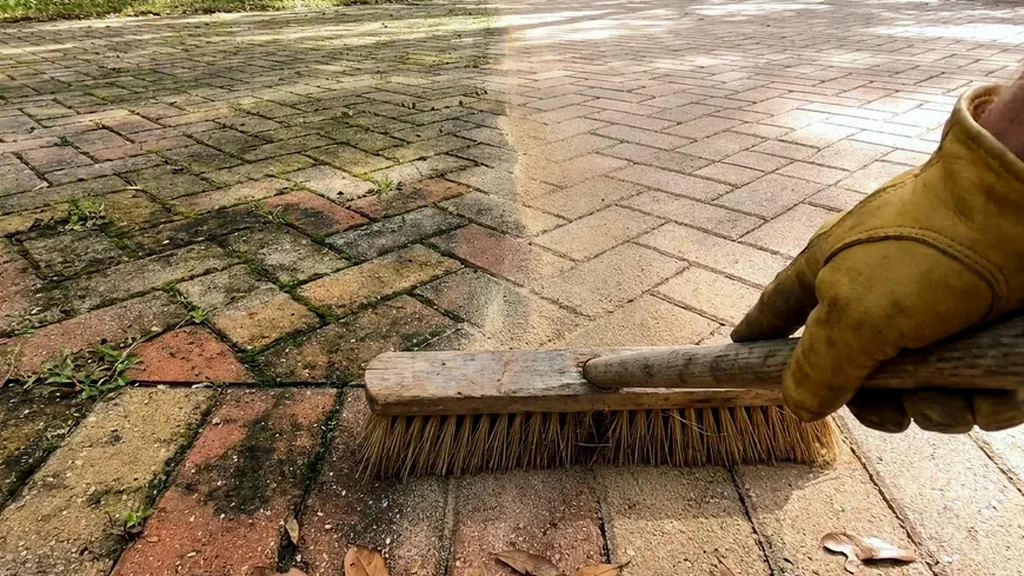
What paver problems show up most in Palm Valley?
Salt film from the sea breeze
A Jacksonville paver company says salty air rides the sea breeze over the Beaches and Ponte Vedra, and that salt spray can dull pavers. It puts driveways near the coast at about 18 to 24 months between coats. Palm Valley sits between the Intracoastal and A1A, close to that breeze. A dull, chalky look is often the first sign the coat is wearing thin. Rinsing the pavers now and then between coats helps the finish hold up. Rinsing the driveway after a windy week also helps keep salt from building up.
Litter from oaks, magnolias and palms
A state marker on Canal Boulevard says oaks, magnolias and above all palms once covered this hammock. Where trees still shade a Palm Valley patio, leaves and fronds sit on the pavers and stay damp. A local cost guide says tree-shaded patios need extra cleaning for algae, mildew and leaf tannin. Those stains have to come out before any sealer goes on. A patio under heavy cover may also need a second pass to lift green growth. Clearing fronds off the pavers each week keeps tannin stains from setting in.
Slow drying on low, flat lots
The same marker says the Intracoastal Waterway drained much of what had been marshland here. One Palm Valley community lists a median elevation of 8 feet, though none of its sampled homes sit in a federal flood zone. Low, flat ground and a humid season from late April to mid-November mean pavers can stay damp for hours after rain. Sealer needs a dry surface, so drying time matters. Ask the contractor to check the lowest corner of the drive before setting a date. A sloped drive dries faster than a flat patio by a pond.
A pool deck that turns slick
A shiny film coat looks rich on a front walk, but it can cause trouble around a pool. Film-forming coats can hold moisture and leave a deck slippery, a Jacksonville cost guide warns. Most decks nearby get a penetrating product that stays grippy when wet. On a Palm Valley deck where guests walk barefoot, that choice matters. A low sheen on the deck also cuts glare off the water. Ask to see the product before it goes on.
An old coat from a past owner
Many Palm Valley homes went up from the 1980s through the 2000s and have changed hands since. A new owner rarely knows what product went on the pavers last. Stripping an oil-based coat first comes up on roughly 10 to 20 percent of jobs, says one Jacksonville sealing company. Water-based sealer cannot go over solvent-based sealer, so the contractor tests first. Keep any receipt or can label you find, since it can settle the question fast. A test patch takes a few minutes and can save a failed coat.
Do gated Palm Valley communities change how pavers get sealed?
They can, since so many homes here sit inside associations. In Plantation Oaks, a gated community with homes built from 1985 to 2006, 14 of 15 recent listings report an HOA. If your association has rules on how pavers look, check them before you pick a wet look or a color change. Then ask for your free estimate and mention the community name.
Palm Valley has about six formal neighborhoods, among them Odom's Mill, Seaside, Dolphin's Cove, Plantation Oaks, Palm Valley Landing and part of Sawgrass. The TPC side of Sawgrass, home of The Players, falls inside Palm Valley. A gated street means the contractor needs a gate pass and a clear plan for parking. Call (904) 467-7129 and say which community you live in.
Ground level matters too. Much of the area was marsh until the Intracoastal Waterway drained it, and one community lists a median elevation of 8 feet. Flat, low lots near ponds and small rivers can stay wet for a while after a storm. When you ask for your free estimate, mention where water collects on your property.
What does paver sealing cost in Palm Valley?
Palm Valley jobs land in the $1.75 to $3.25 per square foot range that Northeast Florida companies commonly publish to clean, sand and seal. A Jacksonville cost guide notes that homeowners in the Ponte Vedra and Nocatee markets often pay slightly more. In Palm Valley, heavy salt film, shade stains and an old coat to strip push a job higher. To see where yours lands, ask for your free estimate, and the estimate is free.
Size helps on bigger properties. The same guide says full hardscape jobs spread setup time across more area, so a drive, walks and pool deck done together can price better per foot. A single small patio does not get that break. Call (904) 467-7129 and ask how the size of your Palm Valley project affects the price.
| Paved area | Typical example | Clean, sand and seal |
|---|---|---|
| 300 sq ft | Small patio or walkway | $525 to $975 |
| 600 sq ft | Two car driveway | $1,050 to $1,950 |
| 1,000 sq ft | Large driveway or pool deck | $1,750 to $3,250 |
| 1,500 sq ft | Driveway plus pool deck | $2,625 to $4,875 |
Math based on the $1.75 to $3.25 per square foot that Northeast Florida paver companies published as of November 2026. Your contractor sets the actual price after seeing the surface. Repairs, leveling and stripping failed sealer are usually extra.
How does a paver sealing job work in Palm Valley?
Walk the property and test the old coat
The contractor checks each Palm Valley surface for salt film, stains, low spots and missing sand. The old coat gets tested, since water-based sealer cannot go over solvent-based sealer. Pool decks get a close look for the right product. Point out any area where water sits after rain. Furniture and planters come off the deck before the wash. If you have photos of past flooding or ponding, share them at the visit. They help the contractor plan the wash and the drying time.
Clean with products made for pavers
The wash lifts salt residue, green film and leaf tannin from the oaks and palms. One local cost guide says its crew never uses bleach, since it weakens joint material and harms paver surfaces. Rinse water is kept away from plant beds where possible. Shaded patios usually take longer than open drives. Salt residue near the garage door gets extra rinsing. Fronds and leaves are cleared off first so the cleaner reaches the paver face. Deep oil spots on the drive can take longer than the rest of the wash.
Refill the joints with fresh sand
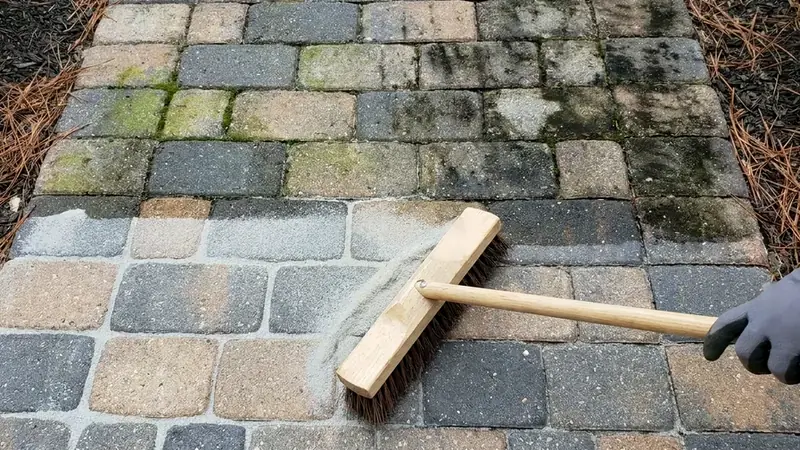
Washing pulls sand out of the joints, so new sand goes back in before sealing. Full joints lock the pavers together and leave weeds fewer gaps. Pool deck edges get the same care as the driveway. Extra sand is blown off the faces so it does not get sealed on top. Joint sand color can be matched so the lines look clean. On a pool deck, the sand line along the coping gets a careful sweep. Full joints there keep the deck from shifting under foot traffic.
Wait out the humidity
Sealer needs a dry surface, and Palm Valley stays humid from late April into November. Low, flat ground near a pond can stay damp long after the sun comes out. A careful contractor checks the shady and low spots before starting. If rain is forecast, the Palm Valley date moves instead of the coat going on wet. Shaded spots by the fence often lag behind the open drive. A contractor may start with the sunny drive and leave the shaded patio for later in the day. Patience at this step keeps the coat from clouding.
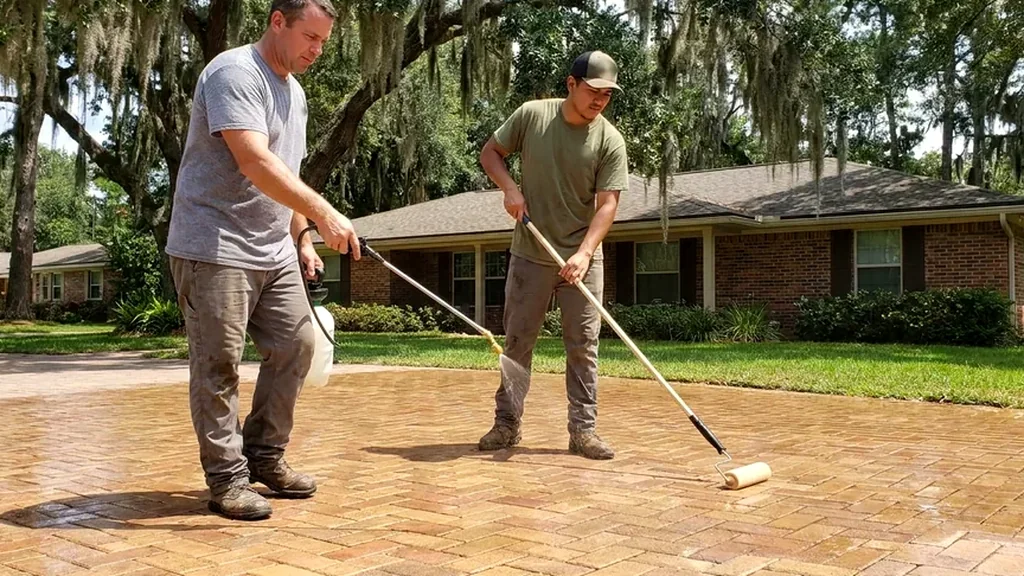
Spray, then even out the coat
One Jacksonville company sprays heavy soak coats through special tips, and another floods the joints, then rolls any puddles flat for an even finish. Feet usually stay off for a few hours and cars for about a day. Companies commonly quote two to five years between coats, and salt air pushes toward the short end. Ask what your sealer needs. Keep the product name handy for the Palm Valley reseal down the road. Keep sprinklers off the pavers until the contractor says the coat has set. Pool furniture goes back only after that, too.
Complete paver services in Palm Valley
Every Palm Valley job follows the same steps: wash, re-sand, dry and seal. The wash clears salt film, leaf stains and green growth, and fresh sand fills the joints the wash opened. Sealer goes on last, so nothing gets trapped under it. Call (904) 467-7129 to ask how long each stage takes on your lot.
Driveways here take tires, sun and salt air. Pool decks take bare feet, splash and furniture, while shaded patios collect leaves and fronds. Each wears at its own pace, so a contractor may treat each one a bit differently. List every surface you want done when you ask for your free estimate.
Sealer choice comes down to penetrating or film-forming, and then the sheen. Around a pool, a penetrating coat keeps traction and a low sheen cuts glare off the water. If a past owner used a solvent-based product, a water-based one cannot go over it. Call (904) 467-7129 to talk through which suits your Palm Valley surfaces.
Palm Valley's wetter season runs from early June to early October, and the cool season from early December to early March. One Jacksonville company says spring and fall often bring the steadiest weather, since sealer needs a dry surface. A low, shady corner may still need extra drying time any month. For a date that suits your yard, ask for your free estimate.
Questions to ask before you hire
- Will the cleaning take care of the black mildew in my shady corners?
- Does the price cover the wash, the joint sand and fixing any sunken spots?
- Will you put the estimate in writing, with the sealer named on it?
- How do you measure the square footage for my quote?
- How do you keep sealer off my garage door, my stucco and my car?
- How soon can my patio furniture and potted plants go back out?
- How many coats of sealer do you put down?
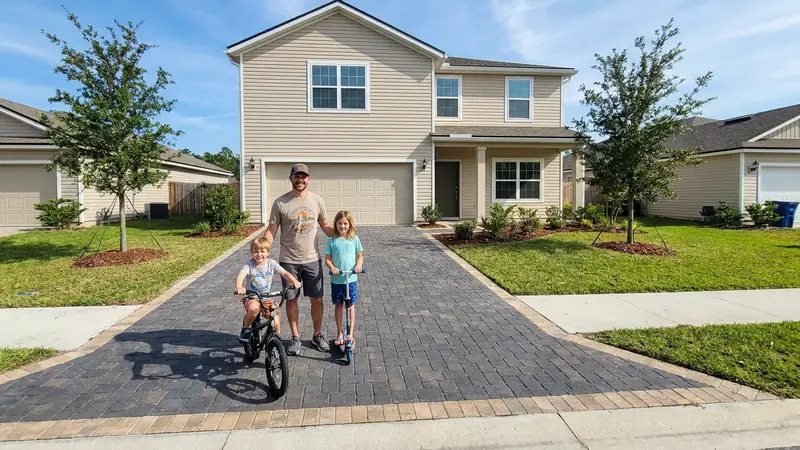
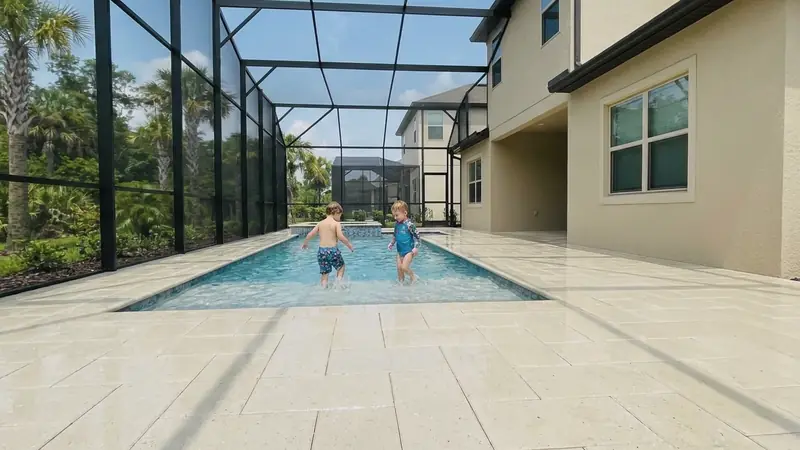
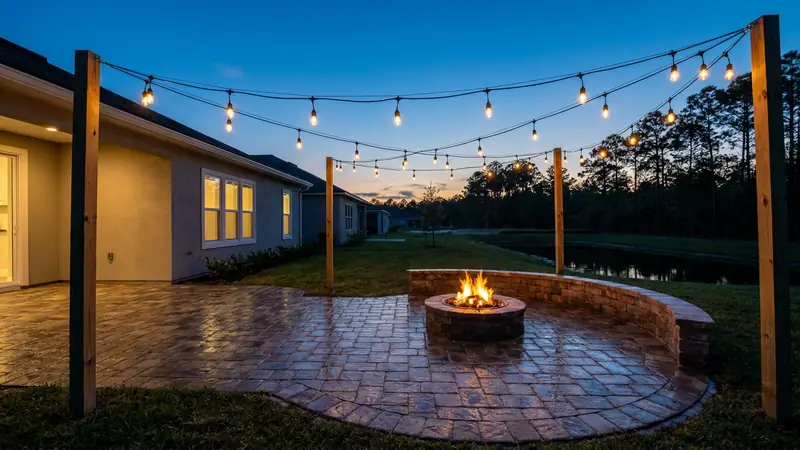
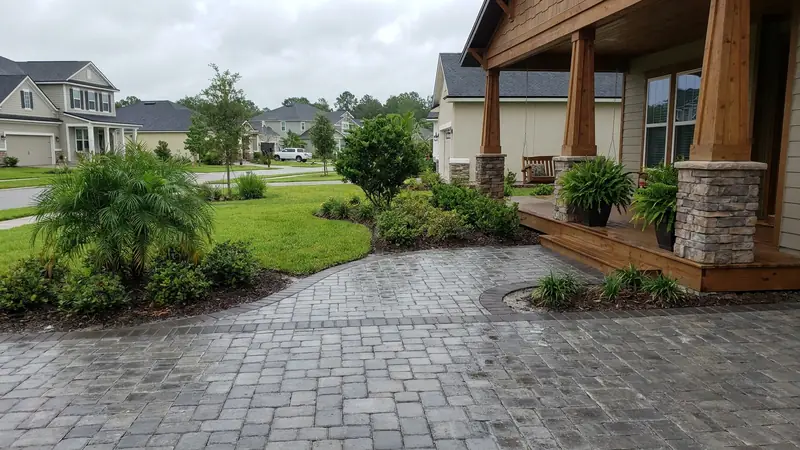
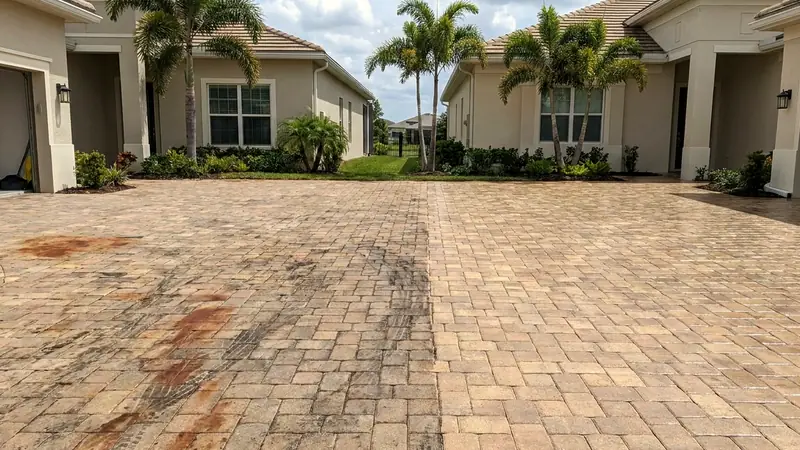
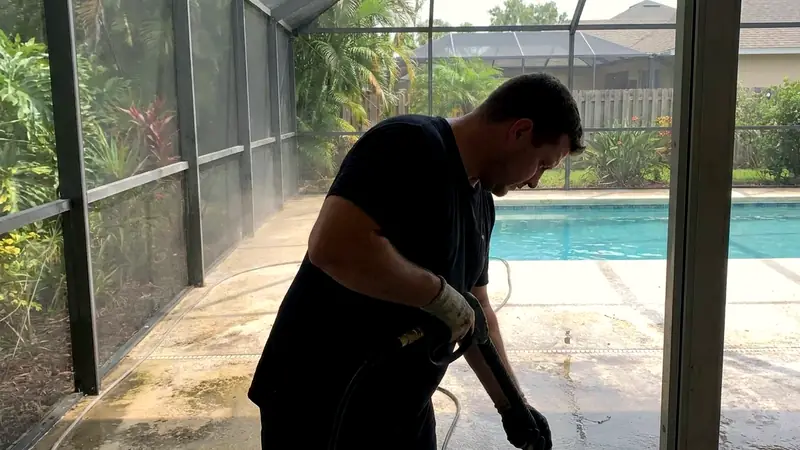
What do sealed pavers look like around Palm Valley?
Why local matters in Palm Valley
A contractor who knows Palm Valley will ask how close you are to the Intracoastal or A1A. Salt air and low ground change the cleaning, the drying time and how soon the next coat is due. Someone who mostly works inland may not think to ask. To reach a contractor who knows this side of St. Johns County, call (904) 467-7129.
Local experience also helps with gated communities. A contractor who works here often knows to arrange gate access and to ask about HOA rules before choosing a finish. That saves a second trip and an unwelcome letter from the association. You can ask for your free estimate and mention your community by name.
Weather is the last piece. Summer storms near the coast can roll in by midafternoon, and damp pavers ruin a coat. A contractor close by can shift your Palm Valley date on short notice when the sky turns. If you need it done before guests arrive, ask for your free estimate with no obligation to hire anyone.
Where did the name Palm Valley come from?
It came from the Sabal palm, and the palms were once a cash crop. A state marker says thousands of palm buds were cut each winter for Palm Sunday and sent north by train from Durbin Station. From 1912, when the Intracoastal Waterway opened, packet boats picked them up at a canal dock. If you live near the waterway, ask for your free estimate and give your street.
You can read that marker outside the community center at 148 Canal Boulevard. It also names Don Diego de Espinosa, whose small fort stood close by in the 1730s. Today the area holds the Ponte Vedra Beach Branch library and the TPC side of Sawgrass. Near any of these Palm Valley spots, call (904) 467-7129 and name your street.
Frequently Asked Questions
What does it cost to seal pavers in Palm Valley?
Most Palm Valley jobs run $1.75 to $3.25 per square foot to clean, sand and seal, the range Northeast Florida companies commonly publish. Salt film, shade stains and an old coat to strip push a Palm Valley job higher. Doing several surfaces at once can bring the per-foot price down.
Why is paver sealing so expensive in Palm Valley?
Most of the price is prep and drying time, not the sealer. Washing, refilling joints and waiting for humid, low ground to dry all take hours. A Jacksonville cost guide also says the Ponte Vedra area often prices slightly higher than inland.
How long does sealer last on Palm Valley pavers?
In Palm Valley, plan on two to five years between coats, the span companies commonly quote. One Jacksonville company says driveways near the coast need a new coat about every 18 to 24 months. Salt air and strong sun put many Palm Valley drives toward the shorter end.
Is it better to spray or roll sealer on Palm Valley pavers?
Many pros do both. One Jacksonville company sprays heavy soak coats with industrial sprayers, and another floods the joints and rolls flat any puddles that form. Ask the contractor how the coat on your Palm Valley pavers will go on.
Does a contractor use dish soap to clean Palm Valley pavers?
No, contractors use cleaners made for pavers. One local company uses environmentally safe soaps and chemicals, and a cost guide says its crew never uses bleach because it harms joints and paver surfaces. Ask what products will touch your Palm Valley pavers and plants.
What time of year suits paver sealing in Palm Valley?
Drier stretches outside summer are easier. Palm Valley's wetter season runs from early June to early October, and the humid period lasts into November. A clear, dry week in late fall, winter or early spring gives the coat its best chance.
Do I need HOA approval to seal pavers in Palm Valley?
It depends on your community. Many Palm Valley homes sit in associations, such as Plantation Oaks, where most recent listings report an HOA. Check your rules before changing the color or adding a wet look.
Can a Palm Valley pool deck be sealed without getting slippery?
Yes, with a penetrating sealer. A Jacksonville cost guide notes that film-forming products can trap moisture and make a deck slick. A penetrating coat with a low sheen keeps traction and cuts glare.
Nearby areas we serve
Ready for a Free Estimate in Palm Valley?
Call (904) 467-7129 and tell us about your pavers.
Free, no obligation